881. The US Postal Service Hits Its Debt Ceiling
The US Postal Service faces a fiscal crisis due to declining first-class mail volumes, necessitating potential changes in its delivery model and funding structure.
your daily dose of economic commentary
The US Postal Service faces a fiscal crisis due to declining first-class mail volumes, necessitating potential changes in its delivery model and funding structure.
The discussion centers on the unpredictability of Trump's foreign policy decisions, their implications for markets, and the interplay between political actions and economic consequences.
Jadrian Wooten discusses various stories that illustrate economic principles and their applications, including sports, currency legislation, AI, tariffs, and job market trends.
Paul Krugman discusses Donald Trump's foreign policy failures and the implications of his tariff strategies, particularly regarding international trade and legality.
Noah Smith honors macroeconomist Chris Sims while discussing the implications of his work and critiquing public intellectuals like Paul Ehrlich and the degrowth movement.
Alex Mayyasi discusses the challenges of purchasing World Cup tickets and suggests economic solutions for better resource allocation.
An argument that oil futures reflect market expectations but are less predictive during wartime, highlighting significant differences in price forecasting between conflict and non-conflict periods.
An argument that AI's integration into research processes presents both opportunities for efficiency and concerns regarding quality and job security in academia.
Jon Hartley interviews Matteo Maggiori about his career, China's economic rise, geoeconomics, and exchange rates in the context of international finance.
Predictions for the women's NCAA tournament highlight the dominance of top seeds, particularly UConn, while discussing differences in the men's and women's games.
Timothy Taylor discusses Adam Smith's insights on wealth, emphasizing the importance of ordinary workers and the nuanced role of market forces and government in economic prosperity.
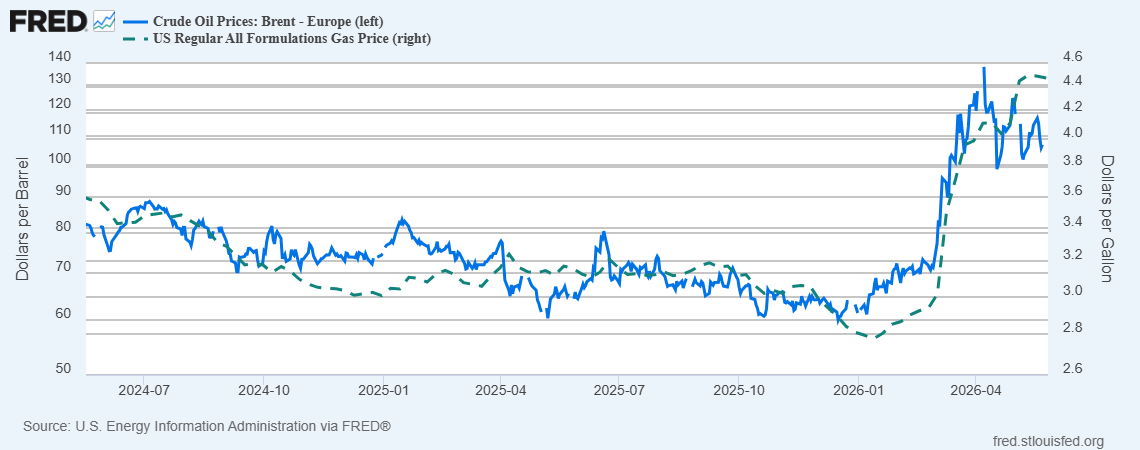
Rising gasoline and diesel prices are attributed to the ongoing conflict in Iran, highlighting the impact of geopolitical events on fuel costs.
Alex Tabarrok discusses the contradictions in pension policies and voter preferences, highlighting the challenges of rational decision-making in democracy.
Paul Krugman argues that America's global reputation has significantly deteriorated under Trump's leadership, contrary to the administration's claims of respect and success.
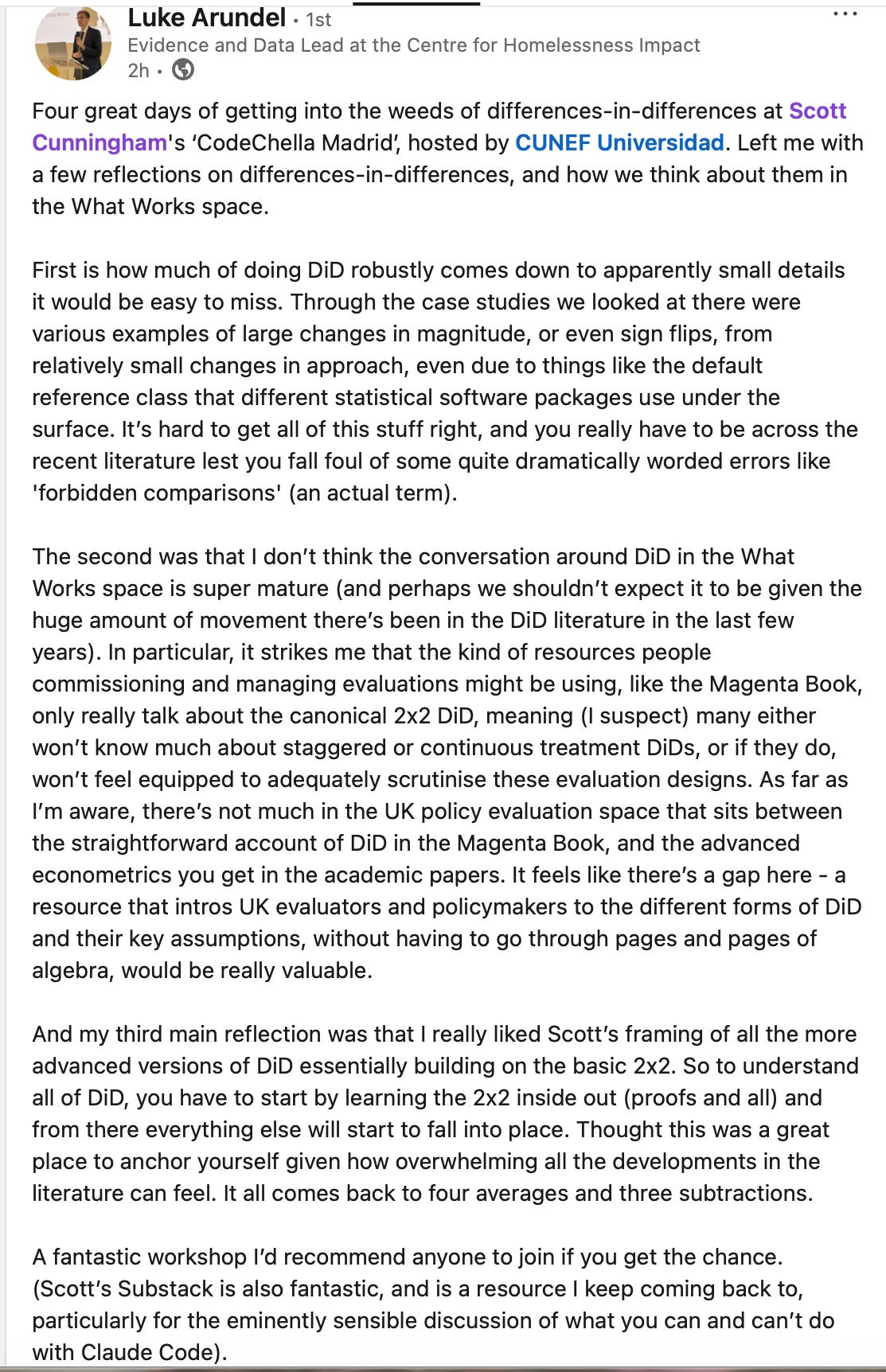
Scott Cunningham announces the upcoming CodeChella workshop in Madrid focused on diff-in-diff methodologies and their applications in research.
An argument that recent inflation trends challenge traditional economic theories, particularly the sacrifice ratio, revealing a complex interplay between supply-side factors and unemployment.
The post examines the economic conditions of the 1990s, highlighting job creation, GDP growth, and the factors leading to a budget surplus during that decade.
The post discusses NCAA tournament predictions, detailing the methodology behind the projections and highlighting key teams and factors influencing their chances of success.
Menzie Chinn analyzes the potential economic impacts of the US-Israel/Iran conflict on equity markets and the SP500 index's performance.
The post discusses the challenges and successes of institutional reform in Cambodia's water supply system, emphasizing the importance of leadership and accountability in overcoming corruption.