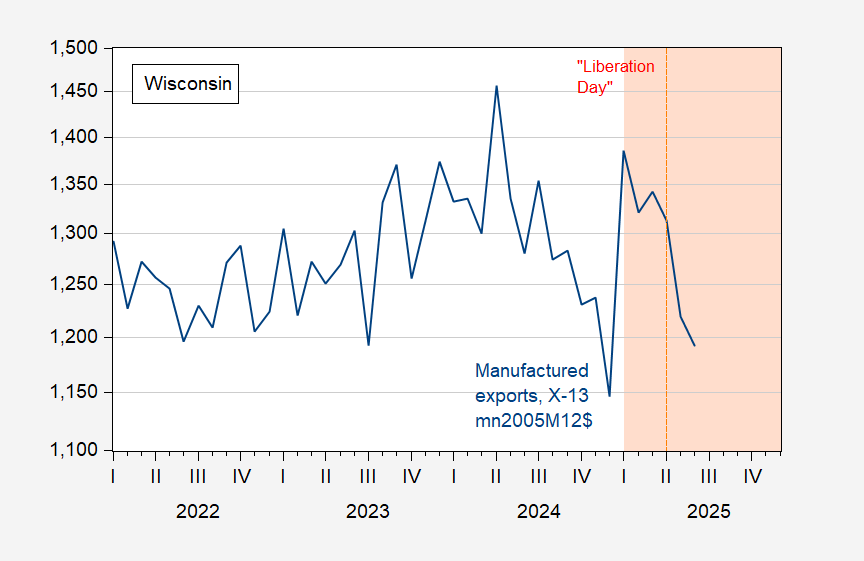
2901. Wisconsin under Trump Trade War 2.0
The post discusses declines in manufacturing employment and exports in Wisconsin, highlighting recent employment data from the Department of Workforce Development.
your daily dose of economic commentary
The post discusses declines in manufacturing employment and exports in Wisconsin, highlighting recent employment data from the Department of Workforce Development.
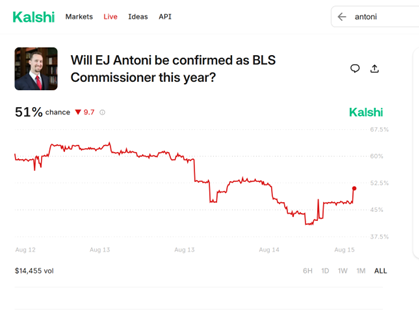
Menzie Chinn discusses Dr. Antoni's controversial views on the economy and his candidacy for BLS Commissioner, highlighting his skepticism towards economic data and policies.

Bobby Allyn discusses a class-action lawsuit against Otter AI for allegedly recording private work conversations without user consent.

Timothy Taylor discusses how international royalty payments can measure China's shift from a technological follower to an innovator in the global economy.
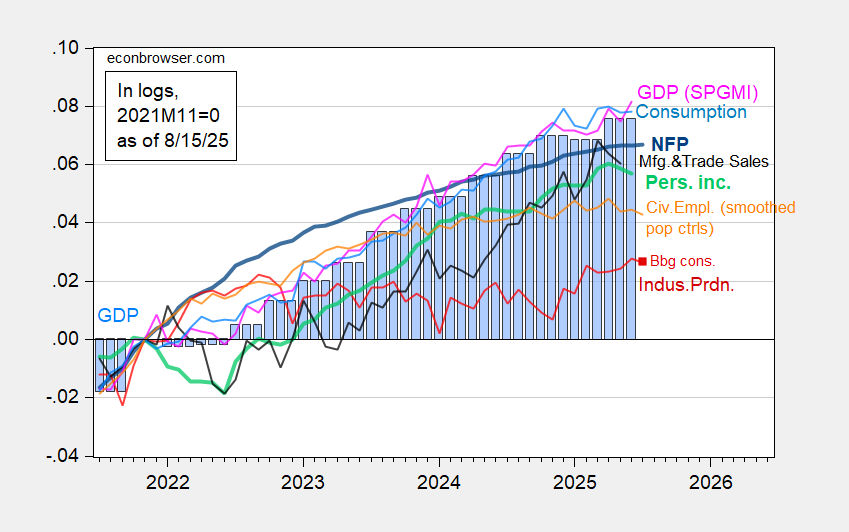
The discussion focuses on recent economic indicators, highlighting declines in industrial production and retail sales compared to previous peaks, while noting the rising coincident index.

The post discusses the Trump administration's decision to release funds for EV chargers despite initial opposition to federal subsidies.

Kenny Malone discusses the disconnect between personal feelings of inflation and official economic data, exploring how perceptions of rising prices affect people's emotions.

The post highlights Anne Krueger's insights on trade, corruption, and economic development from an interview, emphasizing her contributions to economics and the concept of rent seeking.

Kevin Corcoran discusses the long-term consequences of Awokenings, arguing they have not improved conditions for marginalized groups and may have even hindered progress.

A court ruling allows layoffs affecting a significant number of staff at the Consumer Financial Protection Bureau to move forward.

An overview of the housing market highlights increased inventory, flat sales, and pressure on prices, with insights on house prices, mortgage rates, and rents.

Scott Cunningham reflects on his father's declining health and the emotional challenges faced by his family during this difficult time.
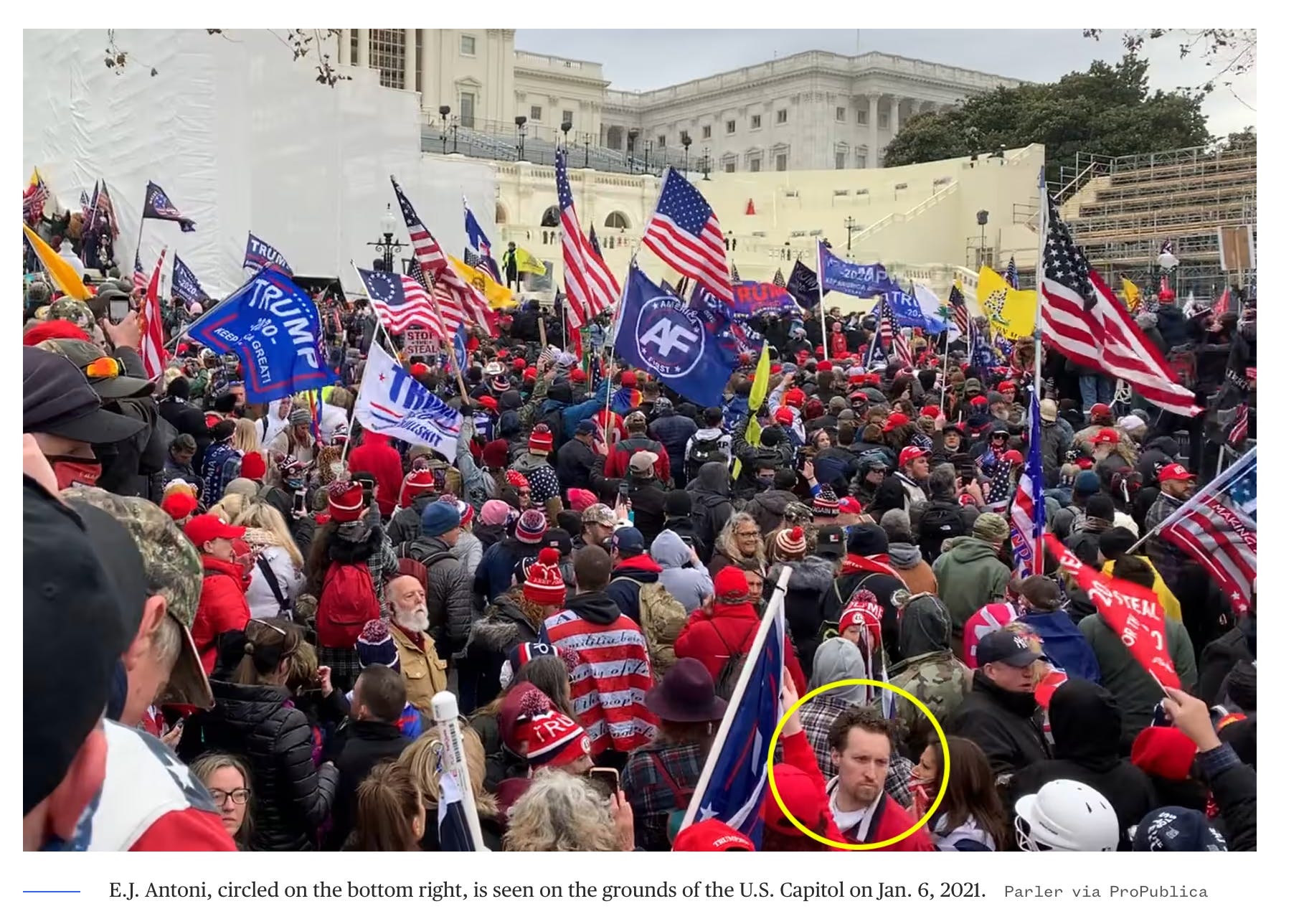
An argument that Trump's attacks on economists reflect his insecurity about economic performance, particularly regarding tariffs and their impact on inflation and growth.

An argument that New York City stands alone in America for its density, transit efficiency, and urban design, contrasting it with other U.S. cities' car-centric development.

The post discusses a slight decrease in industrial production and capacity utilization in July, highlighting trends and comparisons to previous years.

Bill McBride discusses the increase in retail sales for July, highlighting the monthly and yearly changes based on Census Bureau data.
An argument that optimal tariffs are influenced by geopolitical factors, balancing economic welfare with political alignment, particularly in unipolar and bipolar global contexts.

The discussion centers on economic indicators, intergenerational earnings, and a legal dispute involving Apple, highlighting trends in inflation and employment.

Nate Silver analyzes the question of media bias, particularly whether mainstream media leans left, considering factors like audience demand and the influence of major news outlets.

Jon Murphy critiques the US-Japan trade deal, arguing it worsens the trade deficit and fails to protect jobs, even by mercantilist standards.