
3421. On Leaving Switzerland; Getting Robbed on a Train; Getting to Nerja, Spain
The author recounts experiences in Switzerland, including teaching econometrics, a suitcase theft on a train, and traveling to meet family in Spain.
your daily dose of economic commentary
The author recounts experiences in Switzerland, including teaching econometrics, a suitcase theft on a train, and traveling to meet family in Spain.

Noah Smith reflects on the changing values in America, expressing concern over rising anger and a longing for a more tolerant society.
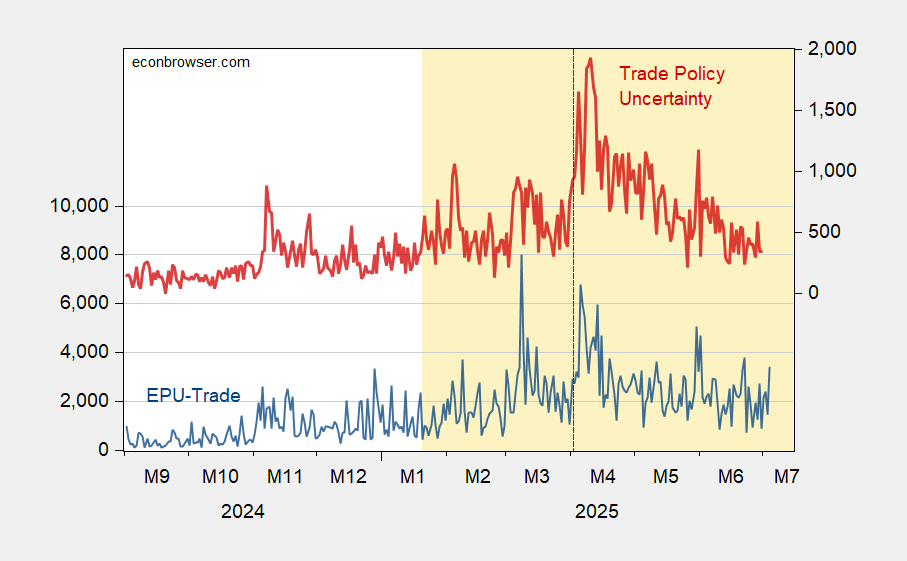
An argument that recent increases in trade policy uncertainty are linked to various political events and initiatives, highlighting their impact on economic conditions.
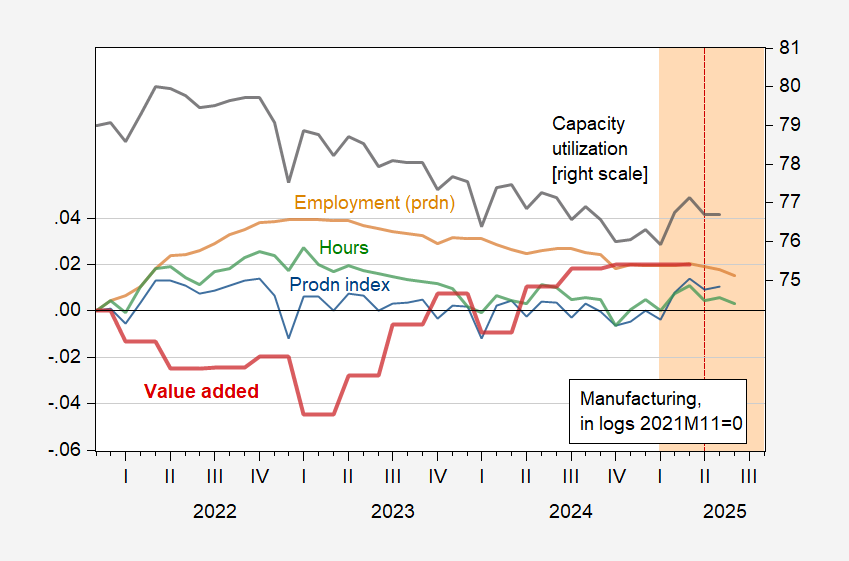
Menzie Chinn discusses the decline in manufacturing employment and hours, highlighting economic indicators and the potential impact of trade deals on recovery.

Kevin Corcoran argues that DOGE's failure stems from unrealistic expectations and the inability to address significant federal spending issues, particularly in mandatory programs.

An argument that explores the recurrence of truncation in production techniques and the implications of parameter variations in a four-dimensional space.

Paul Krugman discusses Jonathan Gruber's role in the Affordable Care Act and the political challenges facing health care in America today.
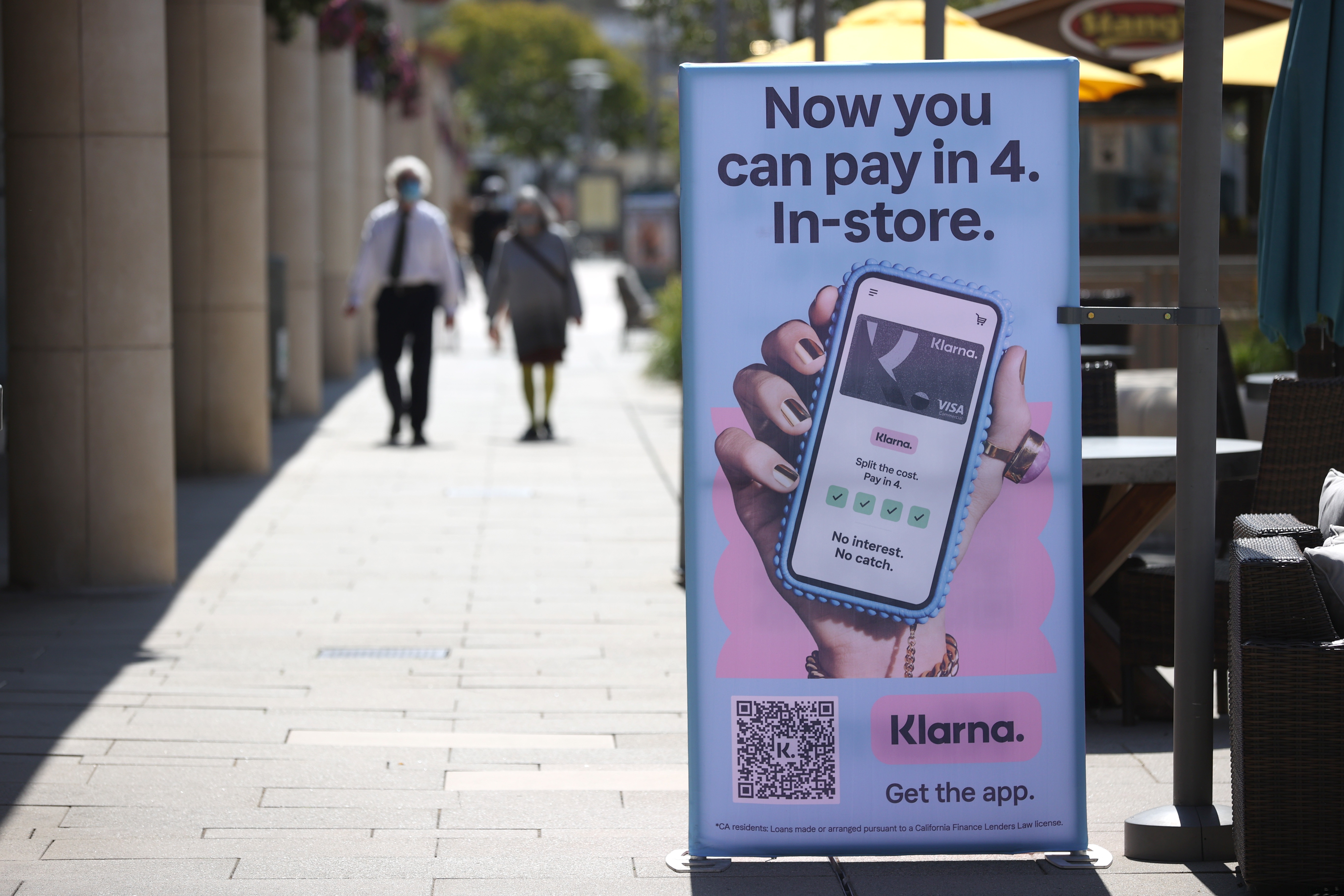
The impact of 'buy now, pay later' services on credit scores and their implications for consumers, particularly younger and lower-income individuals, is discussed.
Tyler Cowen reviews various books, highlighting their themes and insights across diverse topics, including history, science, and culture.

An argument that the economic implications of a major tax and spending bill involve significant borrowing and cuts, raising questions about the resulting deficit's impact on everyday life.

Scott Sumner discusses Bryan Caplan's views on antitrust, critiquing the implications of antitrust laws on philanthropy and economic efficiency.

Noah Smith discusses how overproduction of educated individuals, particularly in humanities and STEM fields, contributes to social unrest and political frustration in America.

The post discusses the U.S. dollar's poor performance this year, attributing its decline to actions by President Trump, according to an economics professor.
Tyler Cowen discusses a new method for evaluating AI progress by focusing on practical usage rather than traditional hard problem metrics.

The discussion focuses on U.S. foreign aid's impact on HIV treatment in Eswatini and Lesotho, and the potential consequences of the Trump administration's policy changes.

The post discusses updates on Q2 GDP tracking estimates, highlighting adjustments in growth forecasts and contributions from various economic sectors.

An argument that the American Revolution provided significant long-term benefits, countering misconceptions about its costs and effects on liberty and governance.
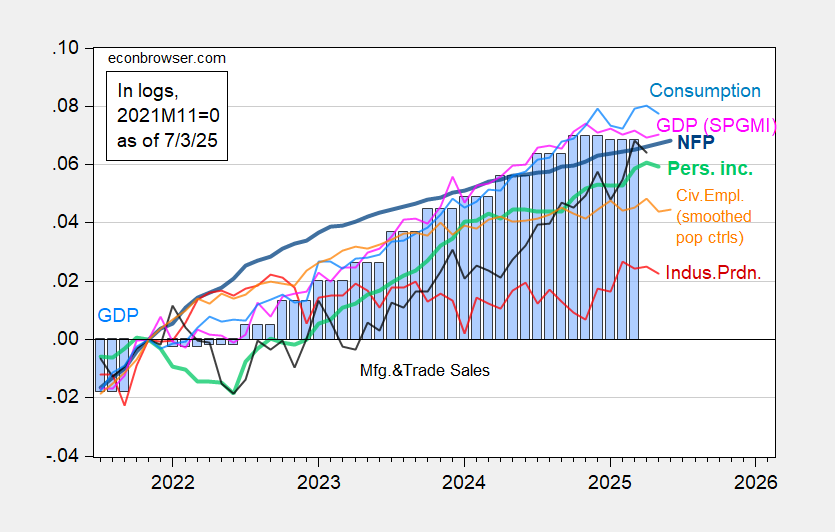
Menzie Chinn analyzes June employment data and May GDP, highlighting employment trends and economic indicators relevant to the NBER Business Cycle Dating Committee.

The post explains new tax exemptions for tipped workers included in a recent tax cut and spending bill passed by Congress.

Emily Feng discusses China's ambitions in artificial intelligence and electric vehicles, highlighting data control and competitive pricing as key factors in these sectors.