
4061. The Tax Collector
Rund Abdelfatah discusses the transformation of the IRS into a powerful government tool through the pursuit of Al Capone.
your daily dose of economic commentary
Rund Abdelfatah discusses the transformation of the IRS into a powerful government tool through the pursuit of Al Capone.

Wailin Wong discusses investor reactions in the bond market and their implications for U.S. Treasuries and economic uncertainty.

Noah Smith discusses America's recent political and economic challenges, particularly focusing on Trump's tariff policies and their implications for the country's international reputation.

The Associated Press reports on Ford's recall of nearly 274,000 SUVs due to potential brake function loss linked to installation defects.

An argument that economic policy uncertainty negatively impacts GDP, with data illustrating the relationship between shocks in uncertainty and declines in economic performance.
Scott Sumner discusses the implications of Trump's policies on DEI and civil rights, highlighting the complexities of ideological diversity and free speech.

The post outlines key economic reports and data releases scheduled for Thursday, including unemployment claims, retail sales, PPI, and manufacturing surveys.

Amanda Aronczyk discusses the impact of the 2018 trade war on U.S. farmers, highlighting tariffs, government interventions, and the long-term effects on agriculture.
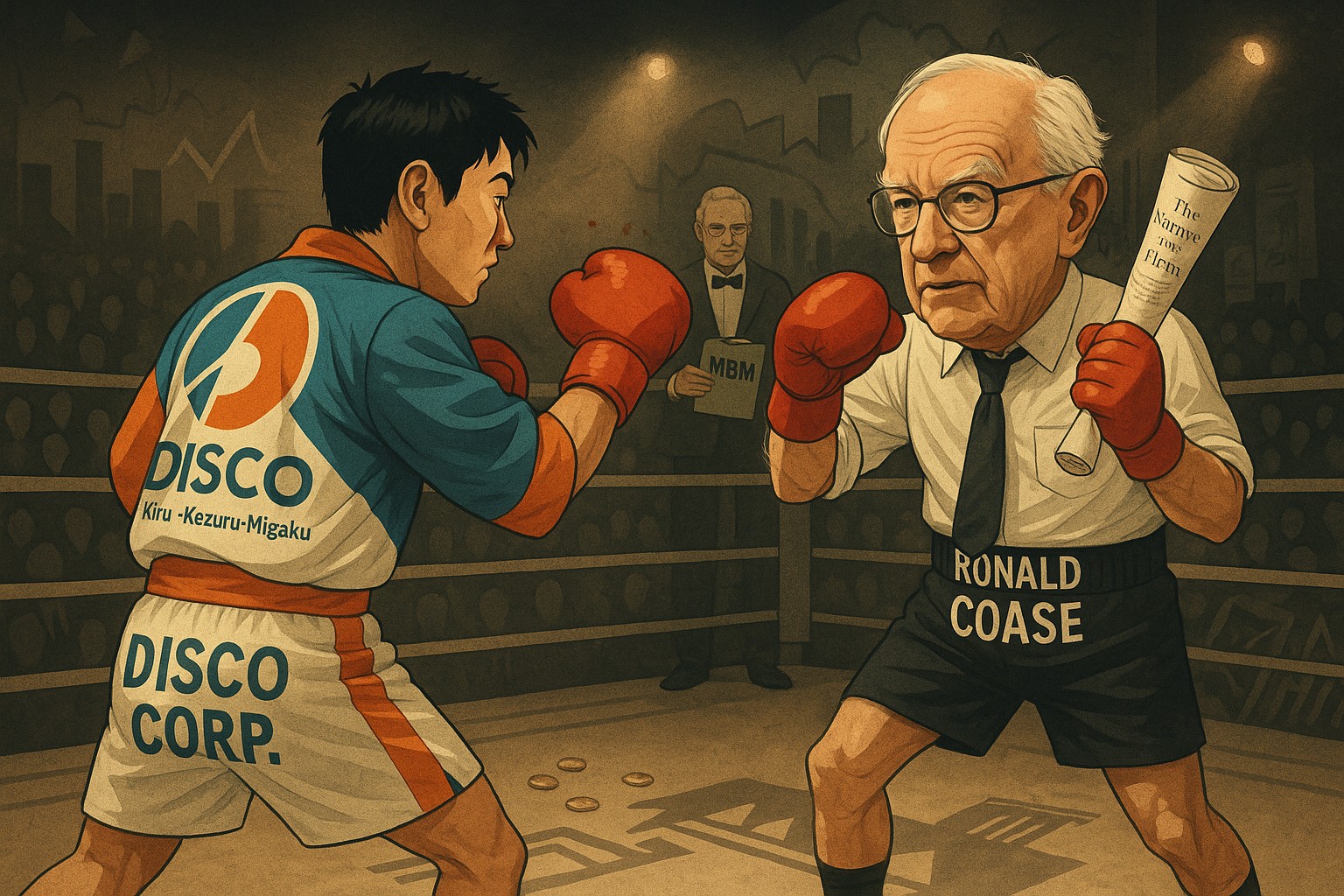
Pierre Lemieux discusses Disco Corp.'s radical free-market experiment and its implications for firm structure, referencing Ronald Coase's theories on transaction costs and organizational management.
An argument that discretion in law enforcement can yield better outcomes than strict legalism, particularly in domestic violence cases, despite unintended consequences from mandatory arrest policies.
An argument that proposed cuts to social programs and renewable energy funding threaten low-income Americans and exacerbate climate change, highlighting the intersection of politics and economics.

Noah Smith discusses perceived stagnation in American pop culture, citing trends in music, movies, and nostalgia among different generations.

Mortgage applications rose slightly, driven by increased purchase activity, while refinance applications saw a minor decline, reflecting steadier mortgage rates and improved home inventory.

The discussion focuses on the perturbations in production coefficients and markups affecting the recurrence of truncation in two industries: machines and corn.

Adrian Ma discusses misconceptions about gun violence in the U.S. and highlights insights from economist Jens Ludwig on behavioral economics and potential solutions.

The Associated Press reports that average egg prices have decreased for the first time in months but remain high compared to previous levels.

Lydia Calitri discusses how ESPN's new streaming app may offer a cable alternative but could ultimately lead to higher costs for consumers.

Scott Sumner critiques the interpretation of housing market studies, emphasizing the importance of distinguishing between demand and supply factors in understanding housing prices.

The post discusses President Trump's overseas trip to the Middle East, focusing on meetings with Gulf leaders and the significance of U.S. deals and personal relationships.
An argument that a small number of firms significantly influence national productivity growth, with the U.S. outperforming the UK and Germany due to a higher proportion of standout firms.