
4101. Trump tried to fire Corporation for Public Broadcasting board members. Then came DOGE
Stephen Fowler discusses Trump's attempt to dismiss Corporation for Public Broadcasting board members and the subsequent involvement of DOGE staffers.
your daily dose of economic commentary
Stephen Fowler discusses Trump's attempt to dismiss Corporation for Public Broadcasting board members and the subsequent involvement of DOGE staffers.

Tyler Watts discusses job growth in the U.S., arguing that new service sector jobs often pay better than lost manufacturing jobs, countering common economic misconceptions.
An argument that job growth in the U.S. has outpaced population growth, with many new jobs offering better wages than lost manufacturing positions, challenging common misconceptions about employment trends.
An argument that job growth in the U.S. has outpaced population growth, with many new jobs paying better than lost manufacturing positions, challenging common misconceptions about employment trends.

The post examines the challenges and potential strategies for Democrats to win the Senate in 2026, highlighting key races and the impact of candidate quality.

The post discusses the April 2025 SLOOS survey findings, highlighting weaker demand for residential real estate loans and tighter lending standards by banks.
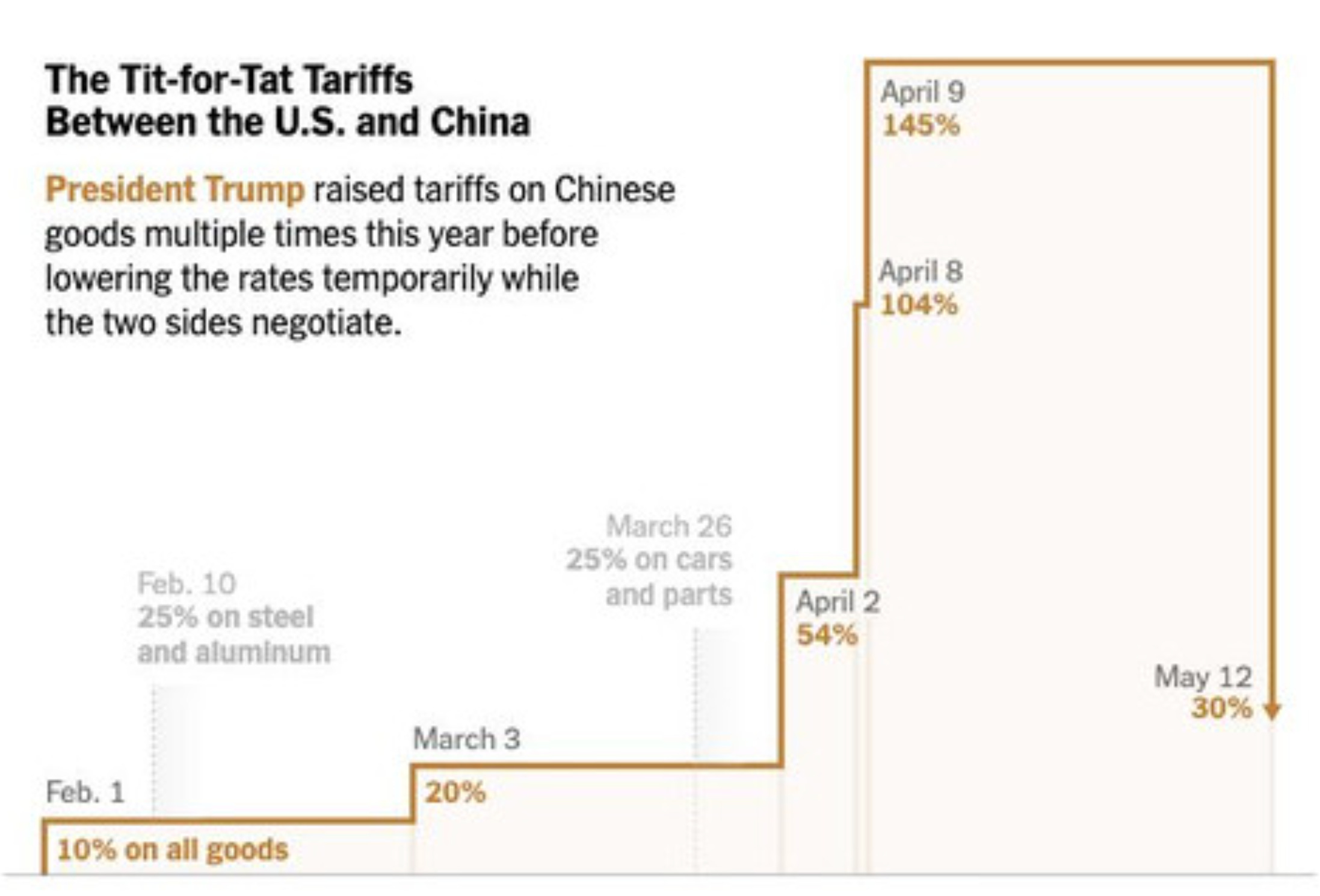
Paul Krugman discusses Trump's recent tariff cuts on China, analyzing their implications for trade policy and economic uncertainty.

Jadrian Wooten explores the complexities of the papal election process, emphasizing the economic implications of voting rules and decision-making trade-offs.

The post discusses the positive market reaction following the U.S. and China’s agreement to temporarily reduce tariffs.

Bill McBride discusses the increase in active single-family housing inventory, highlighting significant year-over-year growth and comparisons to previous years.

Noah Smith discusses the decline of capitalism, highlighting political and economic challenges, including tariffs, the legacy of Warren Buffett, and broader market trends.
Brittney Melton discusses the U.S. and China reducing tariffs and anticipates commerce and cultural exchanges during Trump's Middle East trip.

The post discusses potential changes to student loan repayment options, highlighting a Republican proposal that limits borrowers to two repayment plans.

Willem Marx discusses a temporary agreement between the U.S. and China to reduce tariffs, easing tensions in their trade war.

The post discusses how federal cuts and scrutiny are prompting U.S. scientists to leave the country, impacting both science and the economy.

An argument that explores how rising concert costs and economic pressures are pushing indie artists to use platforms like OnlyFans for financial support.

Scott Sumner discusses the misconceptions surrounding trade war dynamics between the US and China, emphasizing the flawed perceptions of escalation dominance and economic pain tolerance.

Progress in U.S.-China trade talks is noted, but specific details remain scarce following discussions in Switzerland.
David Henderson discusses various readings on Medicaid inefficiencies, individual rationality, and labor unions' impacts on worker outcomes.

Scott Cunningham discusses the concept of "vibe coding" in an AI class, highlighting its democratizing effect on coding for students without programming backgrounds.