
4821. Realtor.com Reports Active Inventory Up 29.2% YoY
The post discusses the increase in active housing inventory and new listings, highlighting market trends and pricing stability amid ongoing supply constraints.
your daily dose of economic commentary
The post discusses the increase in active housing inventory and new listings, highlighting market trends and pricing stability amid ongoing supply constraints.

The post examines how conservative media interprets the Signal leak, with some framing it as evidence of a "deep state" and others viewing it as a security breach.

Pierre Lemieux critiques the inconsistency of Christian support for anti-immigrant policies, advocating for a more humane treatment of immigrants aligned with universalism and economic arguments.
An argument that algorithmic decision-making has advantages like reducing bias but also faces challenges such as human error aversion and the limitations of complexity.

The post analyzes current inflation-adjusted house prices, noting they are slightly below the 2022 peak, and discusses the price-to-rent index and historical trends.

Alex Tabarrok discusses how AI personality traits influence productivity in human-AI collaborations based on recent research findings.
An argument that recent fiscal policy decisions reflect a lack of maturity, with proposed cuts to disability benefits seen as politically motivated rather than economically sound.

Jenna McLaughlin discusses Catherine Eschbach's appointment and its potential implications for federal contracting oversight and conflict-of-interest issues.
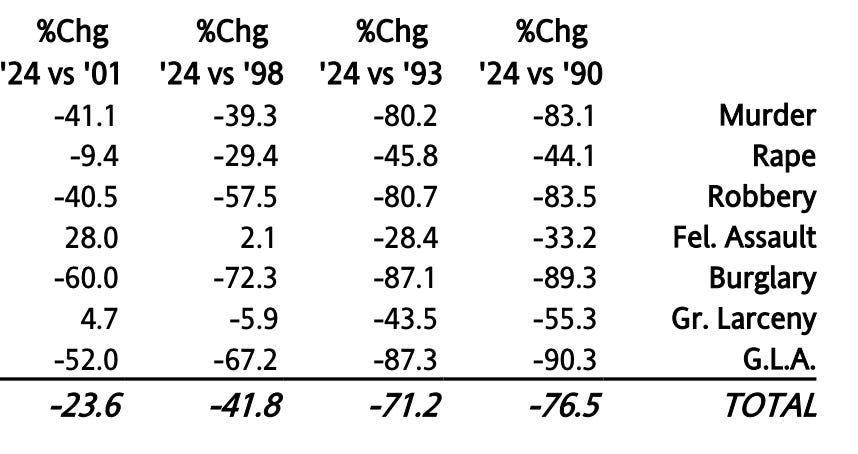
Paul Krugman discusses the perception of safety in New York City, contrasting it with political rhetoric that portrays urban areas negatively, particularly from Trump and his allies.

An argument that companies are eager to pursue deep sea mining despite the absence of established regulations, highlighting ongoing international debates on the issue.

An argument that explores double fluke cases and triple-switching within a corn-tractor model, focusing on production parameters and their economic implications.

An argument that government inefficiency, particularly among progressives, contributes to electoral challenges and hinders the potential for abundance in America.

Sean Saldana explains how nonprofits accept used cars as donations and the financial process involved in these transactions.

An argument that trade with China is not responsible for U.S. job losses, highlighting automation as the primary cause and discussing the implications for nationalism and employment trends.

David Henderson discusses his disagreements with Don Boudreaux regarding the motivations behind exports and imports, emphasizing multiple reasons for exporting beyond profit.
An argument that trade deficits cannot be effectively managed by governments due to the complex nature of savings and investment, which are largely determined by external factors.
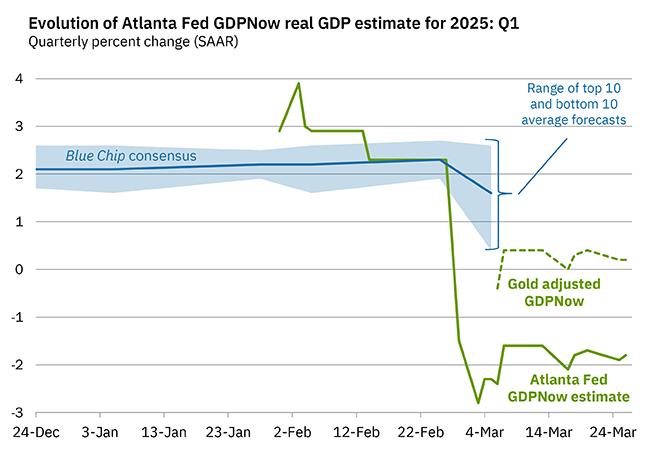
Menzie Chinn discusses the current GDPNow estimates and compares them with other forecasts, highlighting their implications for economic growth trajectories.

A new tariff on foreign-made cars aims to enhance American manufacturing and reflects ongoing trade policies.

Bobby Allyn discusses a judge's decision to allow the New York Times' copyright case against OpenAI to proceed, highlighting its potential impact on media and AI industries.

Some car owners missed EV tax credits due to dealer errors, but the IRS has introduced a solution for this issue.