981. Renewable Energy and National Security
An argument that reducing reliance on fossil fuels enhances national security by promoting renewable energy, especially in light of geopolitical tensions affecting oil supply chains.
your daily dose of economic commentary
An argument that reducing reliance on fossil fuels enhances national security by promoting renewable energy, especially in light of geopolitical tensions affecting oil supply chains.
Scott Cunningham explores the implications of non-standard errors in statistics and their relation to real uncertainty, inspired by his ongoing work with Claude Code.
Scott Horsley discusses the unexpected loss of 92,000 jobs in the U.S. and its implications for the economy.
Bobby Allyn discusses the escalating feud between the CEOs of Kalshi and Polymarket, two competing prediction market companies.
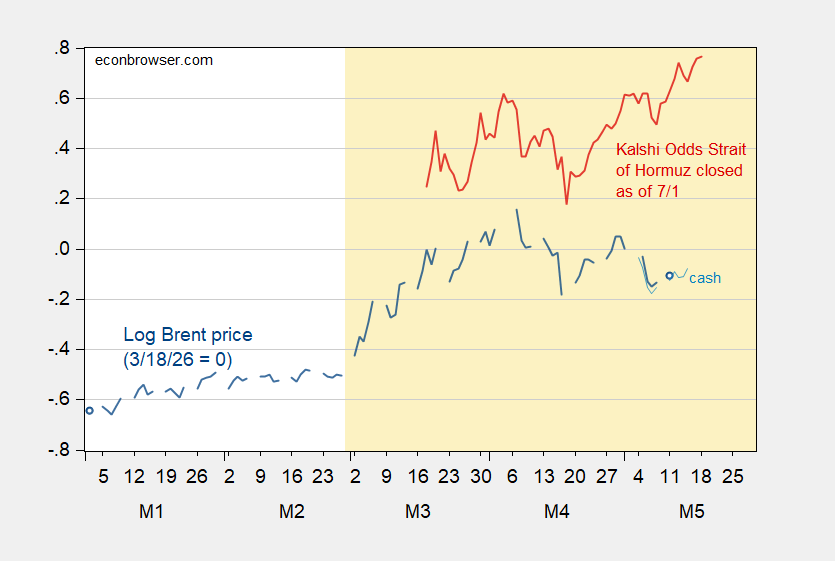
An argument that discusses the likelihood of Iran closing the Strait of Hormuz and its potential impact on global oil markets and shipping traffic.
Noah Smith discusses the conflict between Anthropic and the Trump administration regarding AI ethics and regulation, highlighting partisan divides and differing corporate values in AI development.
Nate Silver discusses the challenges and dynamics of the Republican primary draft, highlighting candidates and their prospects in the context of Trump's influence.
Timothy Taylor discusses the limited role of stablecoins in the economy and their primary use as tools for crypto-asset transactions rather than everyday payments.
Scott Cunningham explores the capabilities of Claude Code in generating academic papers and questions the relevance of AI-generated research in economics.
An argument that New York's Senate Bill S7263 may harm those needing AI assistance by imposing unnecessary restrictions, benefiting licensed professionals at the expense of public access to information.
Paul Krugman discusses Texas's political landscape and its economic growth, questioning whether economic success will lead to a Democratic shift in the state.
An argument that reasoning from quantity changes in economics can lead to misunderstandings about market dynamics, emphasizing the importance of understanding underlying demand and supply shifts.
Tyler Cowen engages with Henry Oliver on literature, Shakespeare, and the interplay between advertising and literary analysis.
Menzie Chinn analyzes current consumer sentiment trends in relation to historical conflicts and their economic implications.
Vito Emanuel discusses Wall Street's response to the Supreme Court's ruling on tariffs and the implications for importers seeking refunds.
An argument that gasoline prices are projected to rise to $3.50 per gallon by the end of the month, referencing prediction markets and current price data.
Menzie Chinn discusses the relationship between oil prices and inflation, analyzing the impact of price levels and changes on economic indicators like the PCE deflator.
Timothy Taylor discusses the importance of fiscal rules in emerging market economies for promoting fiscal discipline and improving budget balances amid rising government debt.
The post discusses the impact of Iran's actions on global oil markets following the conflict, highlighting the strategic significance of the Strait of Hormuz.
The post discusses the potential impact of AI on academic publishing, arguing that an increase in paper production will not lead to a journopocalypse due to fixed journal capacities and the necessity of human input.